.png)
Skin Concerns -
Pigment and Melasma
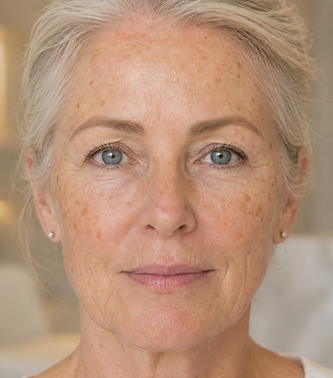
Pigmentation concerns are common and can take many different forms, from age spots and sun damage to more complex conditions such as melasma. While these marks are not harmful, they can affect confidence and make skin appear uneven or aged. Understanding the difference between pigmentation types is important, as each requires a tailored treatment approach.
< Sun damage and age-related pigmentation (also called solar lentigines or age spots) are caused by prolonged UV exposure. These are typically well-defined, darker patches that develop gradually over time, most often on the face, chest, and hands. They respond well to treatments such as laser, IPL, and chemical peels.
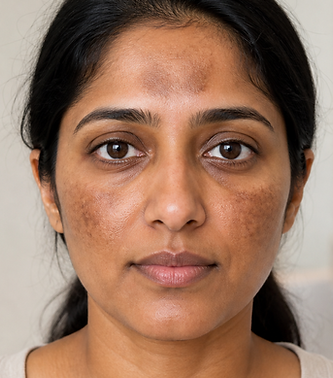
Melasma, on the other hand, is a chronic pigmentation condition triggered by hormonal changes, genetics, or sun exposure. It usually appears as larger, symmetrical patches of brown or grey discolouration, most commonly on the cheeks, forehead, and upper lip. Unlike sun damage, melasma can be more stubborn and prone to recurrence, so management requires a careful, long-term approach >
Treatment Options for Pigment Spots
Pigment spots can develop following sun exposure, inflammation or the natural ageing process. The most appropriate treatment will depend on the cause, depth and type of pigmentation present.
-
PRX-T33 No-Peel Peel – A needle-free biorevitalisation treatment that supports skin renewal and helps improve tone, texture and radiance without visible peeling. A course of treatments may be recommended for gradual improvement. Best for: uneven tone, post-inflammatory pigmentation, dullness and pigmentation accompanied by reduced skin quality.
-
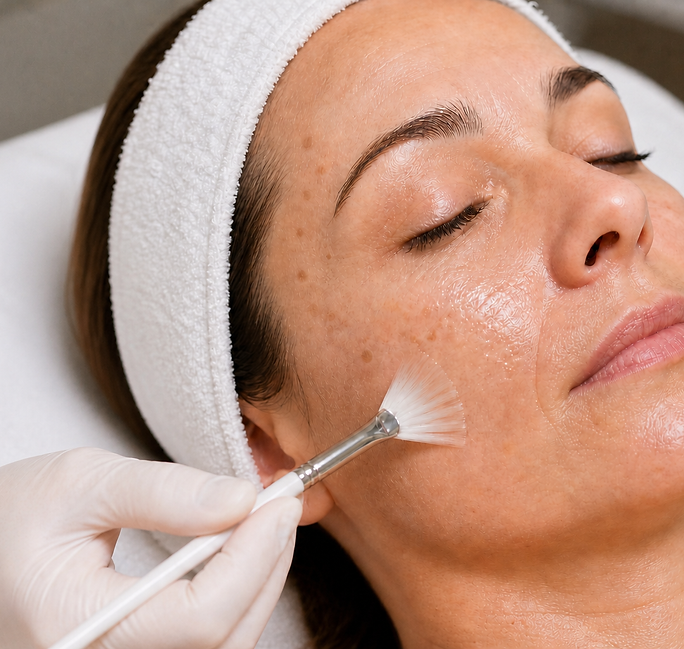
Chemical Peels – Professional chemical peels encourage the removal of pigmented surface cells and stimulate healthy cell renewal. The peel strength and formulation are selected according to your skin type, sensitivity and pigmentation concerns. Best for: sun damage, superficial pigment spots, post-inflammatory hyperpigmentation and uneven skin tone.
-
Professional Skincare – A personalised skincare routine may include carefully selected ingredients that support cell renewal and gradually improve areas of excess pigmentation. Daily broad-spectrum sun protection is essential to protect treatment results and reduce the development of further pigmentation. Best for: mild pigmentation, preventing further darkening and maintaining the results of in-clinic treatments.
All pigmented lesions must be assessed before treatment. Any spot that is new, changing, irregular or otherwise unsuitable for cosmetic treatment may require medical review before treatment can proceed.
Treatment Options for Melasma
Melasma causes flat, often symmetrical areas of brown or grey-brown pigmentation, commonly affecting the cheeks, forehead and upper lip. Unlike individual sun spots, melasma can be influenced by hormones, sun exposure, heat and inflammation, so treatment focuses on gradual improvement and long-term control.
-
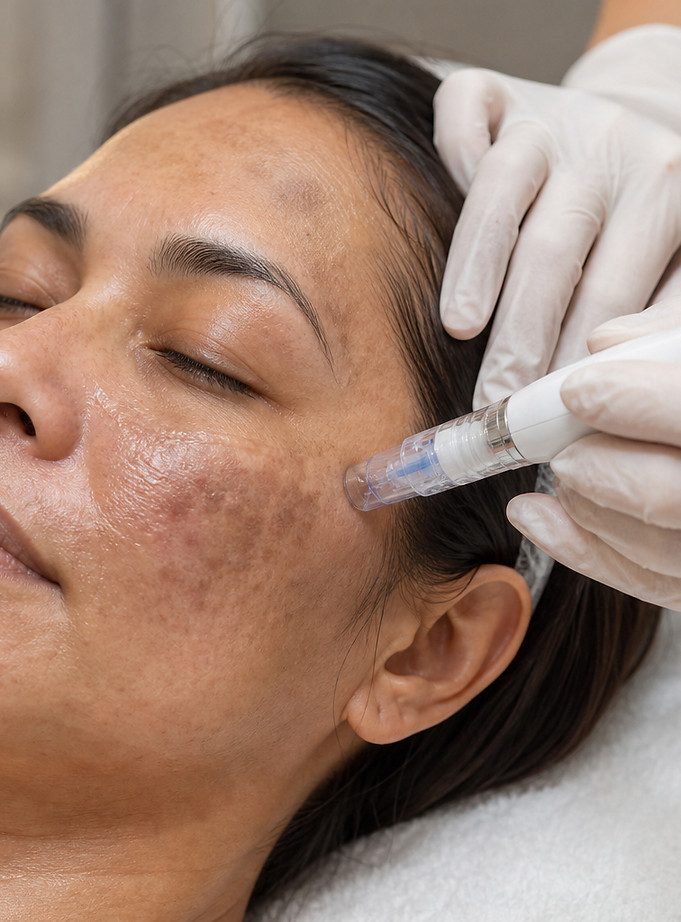
SkinPen Medical Microneedling – SkinPen creates controlled microchannels that stimulate the skin’s natural renewal response. Because melasma can be aggravated by inflammation, treatment is performed conservatively and is only recommended following a detailed assessment. Best for: carefully selected melasma where pigmentation is accompanied by enlarged pores, uneven texture or acne scarring.
-
PRX-T33 No-Peel Peel – A needle-free biorevitalisation treatment that supports skin renewal and helps improve tone, texture and radiance without visible peeling. A course of treatments may be recommended for gradual improvement. Best for: melasma accompanied by dullness, uneven tone and reduced skin quality.
-
SkinPen with PRX-T33 – SkinPen and PRX-T33 can be incorporated into a carefully planned treatment programme to support collagen stimulation, skin renewal and a more even complexion. Treatment timings and intensity are tailored carefully to reduce the risk of triggering further pigmentation. Best for: established melasma accompanied by uneven texture, reduced skin quality or post-inflammatory pigmentation.
-
Chemical Peels – Carefully selected professional peels encourage the removal of pigmented surface cells and support healthy cell renewal. The formulation and strength must be tailored to the skin, as aggressive exfoliation can worsen melasma. Best for: superficial melasma, uneven tone and pigmentation caused or worsened by accumulated surface damage.
-
Professional Skincare – A personalised skincare programme can help reduce excess pigment production and support a more even complexion. Daily broad-spectrum sun protection is essential, and protection from heat and visible light may also form part of your treatment plan. Best for: all forms of melasma, ongoing pigment control and maintaining the results of in-clinic treatments.
Melasma is a long-term condition rather than something that can always be permanently removed. A consultation allows us to assess your pigmentation, skin type and possible triggers before creating a personalised plan focused on safe improvement and ongoing control.